Recent Comments

Popular Posts

Showing posts with label Photographers. Show all posts

COVER: jubilat 20 by Thomas Sayers Ellis

Written By UNDER MAINTENANCE on Tuesday, January 3, 2012 | 7:23 AM

Photo by Thomas Sayers Ellis

BlackArtistNews | January 3, 2011

You've seen him before. Tall, slender, stylish. Nice. His shadow casts light. He's been around the world with and without the aid of hallucinogenics. "Hey Joe" you think. Cool like Starbucks, but unfiltered. An intellectual who breaks shit down in a way that will make the unenlightened find salvation in his words. The spit of his tongue absorbs our souls like lotion.

About jubilat:

jubilat is published twice yearly at the University of Massachusetts, Amherst. From the first issue onward, jubilat has aimed to publish not only the best in contemporary American poetry, but to place it alongside a varied selection of reprints, found pieces, lyric prose, art, and interviews with poets and other artists. Rather than section off these varieties of work, the magazine creates a dialogue that showcases the beauty and strangeness of the ordinary, and how experiments with language and image speak in a compelling way about who we are.

Pick up a copy of jubilat 20 in bookstores or order online here.


7:23 AM | 0 comments | Read More

NEW YORK: Jayson Keeling in Conversation

Written By UNDER MAINTENANCE on Thursday, December 1, 2011 | 2:16 AM

Jayson Keeling, still from The Great Masturbator, 2011. Video, 10:31 min. Image via thirdstreaming.com.

Artist in conversation with writers Rich Blint and Greg Tate
Friday, December 9, 2011, 7pm

10 Greene Street, 2nd Floor
New York, NY

As part of Keeling’s one person exhibition, See Jungle! See Jungle! Go Join Your Gang, Yeah. City All Over! Go Ape Crazy! the artist will discuss his practice in conversation with Rich Blint, writer and cultural critic, and Greg Tate, writer/journalist and director of Burnt Sugar.

Jayson Keeling lives and works in Brooklyn, NY. Keeling began his career as a photographer and film director in the fashion, film, music and the porn industries. Through the use of photography, video and other media, he creates art works that provoke and dismantle pop iconography and the accepted politics of sex, gender, race, and religion. He has been included in exhibitions at El Museo del Barrio, La Mama la Galleria, The Andy Warhol Museum, Exit Art, GBE@passerby, Apex Art, Real Art Ways, Queens Museum of Art, The Bronx Museum, and The Studio Museum in Harlem, among others. Keeling has been awarded residencies from the Lower Manhattan Cultural Council in 2009 and 2007, as well as the Apex Outbound Residency in Ethiopia, 2009. His one-person exhibition See Jungle! See Jungle! Go Join Your Gang, Yeah. City All Over! Go Ape Crazy is on view at Third Streaming through February 25, 2012.

Rich Blint, a New York-based writer and cultural critic, is currently completing his dissertation, Trembling on the Edge of Confession: Racial Figuration and Iconicity in Modern American Culture, in the American Studies Program at New York University. Blint is co-editor (with Douglas Field) for a special issue of African American Review focused on James Baldwin (2012) and was guest editor of Black Renaissance Noir, a journal of pan-African politics and culture (Winter/Spring, 2008). He serves on the Executive Board of Vanderbilt University’s, Issues in Critical Investigation: The African Diaspora, and on the Editorial Board of The Feminist Wire. He has taught courses at NYU, The Brecht Forum, and Hunter College, The City University of New York.

Greg Tate is a writer/journalist, composer and the artistic director of Burnt Sugar, a band that fuses jazz, rock, funk, and African music in a lyrical, exploratory and improvisational manner. He is also a founding member of the Black Rock Coalition. He was recently acknowledged by The Source magazine as one of the ‘God­fathers of Hiphop Journalism’ for his ground­breaking work on the genre’s social, political, economic and cultural implications in the period when most pundits considered it a fad. Writing for the Village Voice from 1987-2003, he offered critic and insight on prominent musicians, actors, artists and activists. His writings on art, culture and politics have also been published by The New York Times, The Washington Post, Artforum, Rolling Stone, VIBE, Essence, The Museum of Modern Art, The Whitney Museum, Tate London, ICA London, Museum of Contemporary Art Houston and The Studio Museum In Harlem, among others. His books include Flyboy in the Buttermilk, Midnight Lightning: Jimi Hendrix and the Black Experience and Everything But the Burden: What White People Are Taking from Black Culture. In 2010 Tate was honored with a United States Artist Fellow award.


Jason Keeling: See Jungle! See Jungle! Go Join Your Gang, Yeah. City All Over! Go Ape Crazy.

Jayson Keeling, Mathias, 2003, Pigment print, 30 x 40 inches. Image via thirdstreaming.com.

Exhibit dates: October 28, 2011 - February 25, 2012


2:16 AM | 0 comments | Read More

HOT SHOTS: Laretta Houston // Schön! // Issue 14

Written By UNDER MAINTENANCE on Sunday, November 20, 2011 | 11:18 PM

Ink Pin
Photographer | Laretta Houston
Make Up | Erica Bogart
Model | Tico Armand

The piercing quality of Laretta Houston’s fashion pictorial “Ink Pin” for Schön! magazine has more to do with approach rather than the fact that the primary visual component in them is safety pins. The inky black and milky white photos (which are literally since the model is coated with black make up and sits inside a tub of milk) are a cosmetic mash up of tribal African, ancient Egyptian and 19th century blackface reference; Houston uses the pins to securely fasten those elements in an imaginative and modern way. 


Schön! issue 14 can be purchased in-stores or online


11:18 PM | 0 comments | Read More

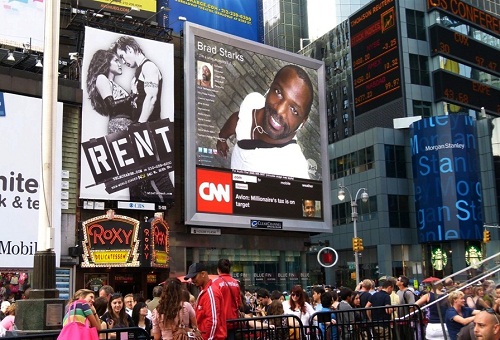
ABOUT FACE: Photographer Brad Starks featured in About.me Times Square ad campaign

Written By UNDER MAINTENANCE on Monday, November 7, 2011 | 11:25 PM

Photographer Brad Starks. © 2011 Brad Starks. All rights reserved.


Fashion and beauty photog drags himself into the big picture
BlackArtistNews | November 8, 2011

It’s an uncommon practice for a social media profile picture to be posted on a billboard in the middle of New York’s Times Square.

But that’s exactly what pedestrians and passersby will be looking at when they see an advertisement for About.me (pronounced “about dot me”) featuring the face of fashion and beauty photographer Brad Starks. 

For the next month or so, his about.me profile will hang over the W Hotel’s Blue Fin Bar on Broadway and 54th.  

About.me is a social identity site where users create a “sleek and sexy” custom web page that presents in one place “all the places [they] live on the web.”   

In September the company launched the About.me in Times Square Contest to find new faces for their fall promotion. During the contest period about.me profile visitors were encouraged to vote for entry contestants.

Starks – who labels himself a “social media addict and creative superhero” – was one of seven runners-up in the competition. 

But his affable smile isn’t what gave him an edge; it was his decision to upload a series of YouTube videos of himself as “Bethesda Jackson” – a handsome, athletic blonde who could give Serena Williams a stroll for her money. 

The videos produced big laughs and voter support: “Bethesda Jackson” made Brad Starks “the man.”

And he’s got the billboard to prove it.  

About.me/bradstarks billboard in New York's Time Square.  

11:25 PM | 0 comments | Read More

WASHINGTON DC: Hank Willis Thomas: Strange Fruit / Corcoran Gallery of Art / October 1, 2011 - January 12, 2012

Written By UNDER MAINTENANCE on Sunday, October 16, 2011 | 3:17 PM

Hank Willis Thomas: Strange Fruit
October 1, 2011 - January 12, 2012

CORCORAN GALLERY OF ART 
500 Seventeenth Street NW
Washington, DC

In this exhibition, artist Hank Willis Thomas investigates the disturbing history of lynching photography from the turn of the 20th century. With images of lynched men and women shown together with contemporary representations of athletes, Thomas invites viewers to consider, remember, and question the transformation of black bodies into souvenirs and commercial objects. Through new photographs, videos, and multimedia work, he examines two forms of spectacle – the historic culture of lynchings and the commodification that surrounds professional sports “I am fascinated with how history and culture are framed,” Thomas has said of his work. “Who is doing the framing, and how these factors affect our interpretation of reality.”

Hank Willis Thomas: Strange Fruit is made possible by a grant from Lodestar Fund.

3:17 PM | 0 comments | Read More

ATLANTA: Black & White and Color / Arnika Dawkins Gallery / October 14 - November 5, 2011

Written By UNDER MAINTENANCE on Thursday, October 13, 2011 | 1:07 AM

1:07 AM | 0 comments | Read More

DURHAM: Photographs From The Wedge Collection / Nasher Museum of Art at Duke University / August 11, 2011 - January 8, 2012

Written By UNDER MAINTENANCE on Wednesday, August 10, 2011 | 11:26 PM


Dennis Morris, "Sister Cool," 1974. Giclée prints, 40 x 30 inches. © Dennis Morris.
Dr. Kenneth Montague/ The Wedge Collection.


Becoming: Photographs From The Wedge Collection

The Nasher Museum of Art at Duke University

August 11, 2011 - January 8, 2012

This exhibition brings together approximately 60 works by more than 40 artists from Canada, the United States, Africa and throughout the African Diaspora to explore how new configurations of identity have been shaped by the photographic portrait within the last century.

This exhibition brings together approximately 60 works by more than 40 artists from Canada, the United States, Africa and throughout the African Diaspora to explore how new configurations of identity have been shaped by the photographic portrait within the last century. Whether these images document an era or reflect on family histories, this compelling exhibition provides a vivid testimony to the increasing presence of artists who chose to reject the common tendency to view black communities in terms of conflict or stereotype. Becoming offers a fresh exploration of the strength, beauty and complexity captured within representations of black life as it is both lived and imagined. Providing insights into the changing roles of the artist and subject, the camera is used to create scenes that vary from everyday realism to a staged universe. Some images have the look and feel of snapshots, while others convey a theatrical or cinematic positioning. Other works explore the conventions of the family portrait and family album within the dynamics of domestic space and implied perceptions of visuality and body politics.

Becoming: Photographs from the Wedge Collection is organized by Kenneth Montague of Wedge Curatorial Projects, Toronto. At the Nasher Museum, the exhibition is supported by the Graduate Liberal Studies program at Duke University, and Gail Belvett, DDS (as of April 6, 2011). Artists include Henry Clay Anderson, Dawoud Bey, Mohamed Camara, Calvin Dondo, Joy Gregory, Tony Gleaton, Rashid Johnson, Seydou Keita, Megan Morgan, Dennis Morris, J.D.'Okhai Ojiekere, Dawit Petros, Charlie Phillips, Wayne Salmon, Jamel Shabazz, Malick Sidibé, Mickalene Thomas, Hank Willis Thomas and James VanDerZee.
11:26 PM | 0 comments | Read More

LECTURE NOTES: Achille Mbembe / Keynote Address / Figures & Fictions Conference / Victoria and Albert Museum / June 24, 2011

Written By UNDER MAINTENANCE on Wednesday, July 27, 2011 | 12:28 PM

Achille Mbembe. (Photo via TGBP - Talented Gifted Black People)
On June 24, 2011, philosopher Achille Mbembe presented the keynote address at a conference titled Figures & Fictions: The Ethics and Poetics of Photographic Depictions of People. The two-day forum was held in conjunction with the exhibit Figures & Fictions: Contemporary South African Photography (April 12 - July 17, 2011) at the Victoria and Albert Museum in London who states: 
This exhibition presented the vibrant and sophisticated photographic culture that has emerged in post-apartheid South Africa. It featured works by some of the most exciting and inventive photographers living and working in South Africa today. The photographs on display responded to the country's powerful rethinking of issues of identity across race, gender, class and politics.
The following bullet points of Mbembe's speech were submitted to BlackArtistNews by conference attendee Shoshone Odess Johnson. The photographs used in this post were taken by individuals included in the exhibit and  may or may not have been actually featured in the show.
ACHILLE MBEMBE:
  • A critical reassessment of South African photographic culture is long overdue. We must open the discourse on photography to discourses on other art forms. This opening must take into account processes changing the photograph, such as the ethics of mass reproduction. 
  • It must attend to the paradox that our world is ever more globalized, and, at the same time, ever more Balkanized. 
  • Not so long ago, people like Simmel read the world as a huge mathematical problem—in terms of calculation, reification, and abstraction. This would have been a world governed by “electronic reason”—the conversion of the human body into data, as with neural imaging and DNA analysis. 
  • Such conversion changes not only processes of subjectivation, but the meaning of matter and the human. 
  • One issue in the practice of photography is inquiring as to the criteria which constitute the human. Digital technology accelerates this inquiry. 
  • Through the 20th century we witnessed the emergence of image capitalism. In image capitalism the image does not simply replace the number but becomes a technical issue in itself. This problem is mentioned in the work of Benjamin, Kracauer, and others. 

    Pieter Hugo, Dayaba Usman with the monkey Clear, Abuja, Nigeria, 2005
  • The calculative, affective, and the sensorial collapse into the image form. 
  • A circuit which runs from emotions to passions to convictions is newly reconnected to the image. These are the new pathways of capital itself. 
  • Images have become a constitutive dimension of the capitalist forces reshaping our affective world. They are, therefore, no longer merely an automatic, replicative reflection of the real world. 
  • Faith, sincerity, and conviction become increasingly important in image practices. 
  • Photography is fraught with problems today because of the nature of colonial rule. 
  • Colonial regimes had to produce a colonial ontology which purported to create unchanging social essences, fixed in time. 
  • Photography became a crucial dispositive in the production of these rules, in order to convince people that all was in order. 
  • The production of taxonomies, however, was a very unruly venture. The knowledge upon which they were founded was always uncertain. 
  • The photographic act and the act of ruling are both based on an epistemic uncertainty. 
  • Colonial governments sought to provide a cast of people’s intimate emotional ecology.

    David Goldblatt, Couple in their House, Soweto, South Africa, 1972
  • Photography was produced as a complement to writings on the colony. Early photographs are a tapestry of forms, an interlocking topography of figures, sounds, and senses. 
  • These processes coincided with the political and rhetorical separation of South Africa from the rest of the continent, as if the nation were a European nation transplanted to the tip of Africa. The most important fictional aspect was that whites needed form genuine ties with Africans. 
  • The early 20th century was a culture of expeditions and adventures of three kinds: military, trade, and missionary. 
  • Photography was informed by the belief that the “pure races” of Africa were dying. It became absorbed in profile portraiture—the arrangement of forces, the comportment of native bodies, surfaces and cleavages, bodies deprived of any interiority whatsoever, a pure portrayal of abjection. 
  • Then came the restlessness of travel photography–repetition and compilation function like hunting—to photograph is like throwing a die. 
  • Much photography theory in the West has been about photography’s troubling psychic presence to the Real—its doubling and anarchic unruliness, its power to excise time—a deep anxiety as to the constitutive elements of the Real. Such an anxiety is not found in Western or Central African anthropologies of the Real. Baudelaire, Barthes and others were preoccupied with the question of stabilizing, restoring, and recentering the Real. 


    Graeme Williams, Springfontein, South Africa, from the Edge of Town series, 2006
  • The photograph, in essence, was a fixed image created by light. The process by which a substance is mediated by light. 
  • This was the case until digital photography. 
  • Western theory reads photography as the substitution of a living image by a physical object. This substitution has brought back some old animistic beliefs, setting in motion a dialectics of animism, mechanism, and reproduction. 
  • The animistic sign of the primitive, then, is summoned in the very act of precise documentation that supposedly inaugurates rationality. The anxiety that the Real will be eaten up by the spectre of the primitive returns in the image. 
  • Photography keeps the human person in circulation, in a kind of Promethean act. It traces the shadow of the subject by permanently capturing something fleeting. Death alone can no longer remove the human from circulation. The image, not the body, marks duration in the moment of photography. Photography liberates the human from the slavery of the body with its power of luminous ephemerality. The subject now has access to a purely spectral future.


    Nontsikelelo Veleko, Kepi, 2006
  • The commonality of contemporary South African Black photographers is that they aim at retrieving the human from a history of waste. Peter Magubane, [Santu] Mofokeng, and many others. 
  • Black photography shares a certain understanding of risk. To photograph meant to take personal risks, to end up in exile...Magubane went to prison many times. 
  • I don’t want to make it appear that there was a time when photography was powerful, and a time when it was no longer. That is not what I would like to convey. 
  • However, there was a time when, in photographs, life was not only narrated, but photos were, in and of themselves, events of life. These were powerful images, because in those photographs (Magubane, Mofokeng, etc.), the Real was in search of its concept, and the image provided that concept. This had nothing to do with high theorizing. Such photographs simply became the places for an encounter with the present. 


    David Goldblatt, Mofolo South, Soweto 1972
  • The question one should ask is therefore whether we can discern similar tensions which mark contemporary South African art and photography. Contemporary South African art seems content to use the techniques of quoting, re-appropriation, and recombination.  
  • After apartheid, we have not witnessed the explosion of aesthetic boundaries one would expect. 
  • We have to wonder whether art in general, and photography in particular, has lost its historical power to give form to life, and has, instead, become subservient to repetition. 
  • This malaise tends from the fact that, as a country, South Africa itself is a museum without walls. A total museum. This museum is installed everywhere and nowhere in particular. It seems unable to create an archive. 
  • There seems to be no nexus, no grid to locate or organize what has been dispersed and fractured. History has been replaced by an endless procession of bodies, a permanent compiling of weak images and objects devoid of any concept. That’s what I believe. 
  • This inability to create an archive is probably the most potent dilemma affecting cultural life in South Africa today. 
  • Because of this inability to create an archive, we no longer know how to distinguish between objects and images. We are unable to give distinct meanings to distinct things. This gives us the overwhelming feeling of a radical fragmentation and dispersion of the Real. Yet there is still life and movement, life that comes and goes with ebbs and flows. But there has been a delay with absorbing the new Real in art, a duplication of delays, including the suspension of the revolution by the settlement called democracy. For the real purpose of democracy is to put off the revolution. 
  • The main tension within South African culture and society today is the realization that there is something unresolved in the settlement that brought an end to apartheid. There has neither been a big defeat, nor a big victory, so there is a stalemate, including in the field of culture.

    Kudzanai Chiurai, The Minister of Education,  2009
  • Meanwhile, new inspirations are underway. New inspirations of how people desire things and desire each other produce images of their own creation. This question of self-creation and self-ownership will become the post-apartheid question par excellence. 
  • New photography depicts subjects who are struggling to construct themselves fully and consciously in terms of desire, fantasy, and memory. It refers to forms of life that are inseparable from new bodily forms, it renders visible new hetero and homoeroticisms. 
  • It is in search of a way to love after racism has inflicted so much damage to the psyche, and in the midst of so much continuing suffering. 
  • The photographer is a witness to life, life understood as a regenerative force. 
  • I would like to end with a reference to Rotimi Fani-Kayode, a Black British artist. I would like to end with his gesture to the mask, in a piece called “Traces of Ecstasy.” I end with his work and thought in order to gesture toward what we may call the masks of the Real and the limits of photography. Kayode did not develop a full-blown theory of the African mask. But he was onto a very significant path when he argued that, in pre-colonial Africa, the Real always appears under the sign of the mask, or is usually read through the lens of the mask. A mask is both a sign of human presence and of his or her absence. It is made of images suggested by human or animal forms. It is fundamentally an imaginative interpretation of life. Its function is to produce ambiguity so that interpretation becomes possible, because without ambiguity there is no possibility of interpretation. In order to interpret, we need to undermine conventional perceptions by bringing incoherence to the surface of life. Otherwise, the mask is equivocal as the Real itself. Photography excludes as much as it contains. It can only transcribe human experience in terms which preclude the fragmented and ambivalent equivocal nature of life and history as symbolized by the mask. The incoherence of human experience can never be reconstituted within the limits of the photographic frame, so maybe it’s time we stop asking photography to do what it cannot do.


    Installation view of Figures & Fictions at Victoria and Albert Museum, London, 2011
    (via Artthrob.ca.za)
QUESTION AND ANSWER SESSION:
  • I’m not South African, so I feel somewhat irresponsible commenting on it at such length, even though I’ve lived there for several years. Nobody has called me to account for my irresponsibility, which should tell you something about the place. I come from West Africa, and a few things come to me when one thinks of South Africa as an idea, not just as a geographical location. And I think that’s the task of art: to think of a place, a region, as an idea or a concept. 
  • The end of apartheid is one of the defining events of the 20th century. It is the first time in recent history that a racial state has been dismantled. That has not happened elsewhere. But the event has not happened in the way we’d hoped it would happen. It has happened in a totally different manner, in an unexpected way. So from a cultural point of view, what South Africa is facing is the difficulty of dealing with the unexpected, which takes the form of the unresolved, and the whole new set of dilemmas for which there doesn’t seem to be a name.


    Tamar Garb, curator of Figures and Fictions reflects on her Cape Town upbringing and the exhibit.


    Figures &Fictions monograph on Amazon.com


    Shoshone Odess Johnson is associated with the Aural and Visual Cultures Programme at Goldsmiths, University of London. He is originally from Oakland, CA, is interested in the aesthetics and politics of the chromatic, and people say he's "very intense." This is his first contribution to BlackArtistNews.


    Related Links:


12:28 PM | 0 comments | Read More

VIDEO: Andrew Dosunmu Photography Exhibit @ The Palms Shopping Mall, Lagos, Nigeria

Written By UNDER MAINTENANCE on Thursday, July 21, 2011 | 9:34 AM


A shopping mall is an unorthodox place to showcase art but photographer Andrew Dosunmu makes it all make sense in this YouTube feature entitled Music: A Symbol of Nigeria's Independence, An Exhibition of Photographs by Andrew Dosunmu at the Palms in Lagos, Nigeria. Exhibit took place in 2010 and was curated by Kunbi Oni. 
9:34 AM | 0 comments | Read More

PROPS: CLAM magazine

Written By UNDER MAINTENANCE on Monday, July 11, 2011 | 4:52 PM

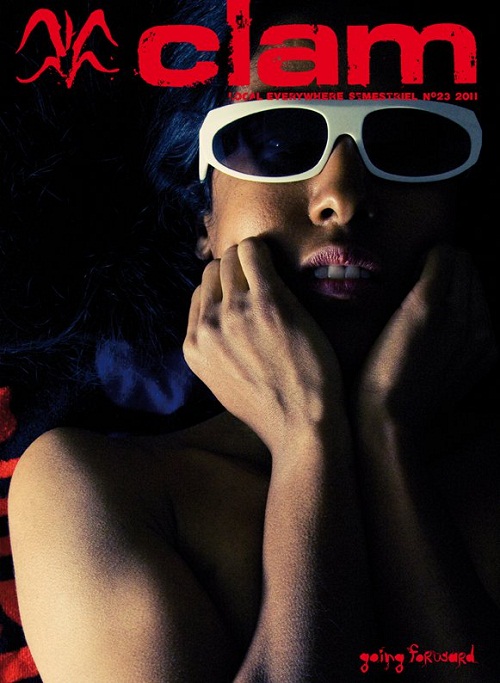
The Spring/Summer 2011 issue of CLAM magazine. Photograph by Andrew Dosunmu. 

CLAM magazine founder and publisher Andy Amadi Okoroafor truly understands the meaning of "globalism.” Each issue introduces readers to individuals from various parts of the world who are dedicated to their personal mode of expression – artists, models, photographers, musicians, writers and activists are the norm but a Q&A with an Asian immigration detainee in Australia (in the Spring/Summer 2011 issue, pictured above) is a prime example of the magazine’s real sense of inclusion. There is usually one advertisement per issue, no table of contents, no mass head, no contributor’s page, but each issue has a theme and all the interviews are conducted with that theme in mind. Arguably, when reading CLAM it could be to your advantage to be bi- or multi- lingual: the magazine prints the interview subject's response in their native tongue. But don’t let that stop you from purchasing a copy of this excellent magazine because the photographic and artistic imagery  – of which photographers Andrew Dosunmu and Marc Baptiste regularly contribute – translates successfully in any language.


The CLAM magazine concept:
CLAM is a unisex magazine whose goal is to promote creativity, concepts and ideas in fashion, architecture, music, design, the arts, free-time, travels and African design. These different themes are approached in two main areas: Lifestyle and Trends. Each subject is part of an original and conceptual artistic direction. The concepts are presented through the expression of the artists and creators coming from very different horizons.The place accorded to the image is central: to be unusual, so as to create constant surprise for the viewer. Experimentation is one of the characteristics of CLAM which explains its layout: always changing, never fixed. CLAM wants to encourage creative reflection. The presentation is based on ideas and not seasons. This concept confers to the magazine as a collector's item. 

Publisher Andy Okoroafor on the CLAM concept:
"The fashion and visual creative worlds are very closed, our vision was to make them open and bring more interesting views out to the fore… Also we wanted to create a global platform for creative people to discover each other...then finally we wanted the create a place for information on creativity in an honest non elitist fashion ..while using the same elitist tool, very tricky!!" 

LINKS:
4:52 PM | 0 comments | Read More

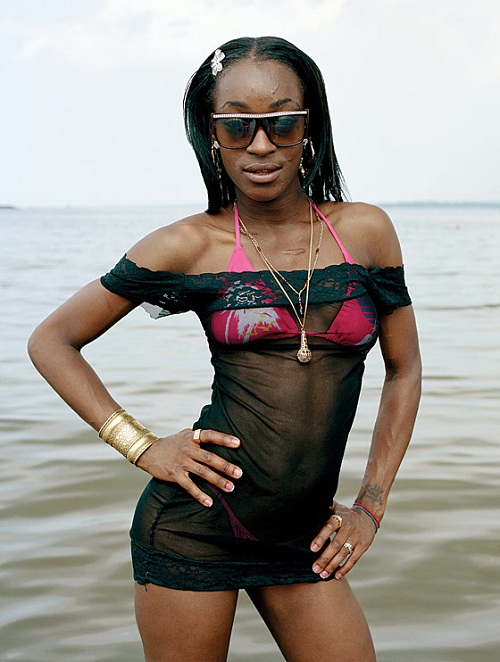
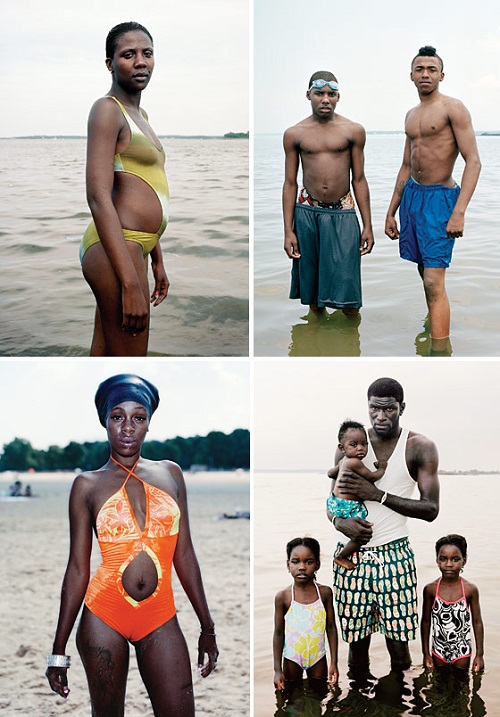
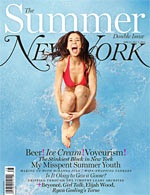
HOT SHOTS: Wayne Lawrence // Orchard Beach Photos // New York magazine // June 27 - July 4, 2011

Written By UNDER MAINTENANCE on Sunday, July 3, 2011 | 9:44 AM

(Photo: Wayne Lawrence/Institute for Artist Management)

(All photos: Wayne Lawrence/Institute for Artist Management)


“I think that it’ll take a lifetime for me to ever be satisfied with my work.”
TEXT: Holly Stuart Hughes for Photo District News


BORN 
Sandy Point, St. Kitts
RESIDES 
Brooklyn, NY
EDUCATION 
Brooks Institute
AWARDS
Katrina Media Fellowship, OSI, Eddie Adams Workshop, LIFE Magazine Award 
CLIENTS 
Esquire, Essence, Newsweek, Repubblica XL, Trace, Vibe, XXL, NYTimes.com
EXHIBITIONS
Open Society Institute, New York; The African American Museum of Philadelphia; The Nathan Cummings Foundation, New York; The George and Leah McKenna Museum of African American Art, The Corridor Gallery and The Calumet Gallery, New York
FAVORITE ASSIGNMENT
“Traveling to Jamaica to photograph dance hall artist Mavado for Vibe magazine. I traveled with Vibe editor Rob Kenner and we were given the green light to photograph Mavado in the ghetto where he was born and raised. In the end, it ran for six pages.”
GREATEST CHALLENGE
“The greatest challenge for any young photographer at this point is trying to establish a business in an environment where everybody is trying to get more for less.”

In the year 2000, Wayne Lawrence was working as a carpenter in Reseda, California, “looking for something else do that I felt passionate about” when he came across Black in America by Eli Reed and A Choice of Weapons, the autobiography of Gordon Parks, at the public library. They introduced him to “a documentary tradition that I knew instantly that I wanted to be a part of.” His obsession with photography lead him to community college classes and then to the Visual Journalism program at Brooks.

One day on his way to Brooks, he spotted photographer Kwaku Alston parked in his car on a Los Angeles street, and asked him for an internship. The nine months he worked in Alston’s studio was an invaluable practical education, Lawrence says, “because Kwaku is so meticulous about his business.”

A native of St. Kitts, Lawrence moved in 2004 to New York where he has used street photography and portraits to explore “my experience as an immigrant and my appreciation for the people I meet on the street and the culture of the city.” To pursue editorial work, he emails photo editors a link to his web site; he’s landed many of his jobs through word of mouth. Over several summers, he’s shot portraits at Orchard Beach in the Bronx using a tripod and on-camera flash. After he posted them on his Facebook page, two friends independently recommended the work to Jim Estrin, editor of The New York Times Lens Blog. The series ran on the blog, along with an interview with Lawrence, in December 2009.


9:44 AM | 0 comments | Read More

CINCINNATI: Sheila Pree Bright - Girls, Grillz and Dolls / Country Club Projects Gallery / June 10 - July 22, 2011

Written By UNDER MAINTENANCE on Friday, July 1, 2011 | 11:10 PM


Location:
3909 Madison Road
Cincinnati, OH 


Image: SHEILA PREE BRIGHT, Untitled #2, 2003. Chromogenic Print. 24 x 30 inches. Edition 15/1 AP.
11:10 PM | 0 comments | Read More

POST: Ayana Vellissia Jackson / Vogue.it / June 13, 2011

Written By UNDER MAINTENANCE on Tuesday, June 28, 2011 | 2:25 AM


Article and Photo: Fiorella Ruth Kibongui
Published: 06/13/2011

Her origins are often mistaken and the only sure data she has is a DNA test that traces back some of her forefathers in Tanzania

Suspended between a past in the States and a present in South Africa, Ayana Jackson uses photography to describe the complexity of the Diaspora identities. Starting from her sociology studies, she’s shown the faces of black communities that, after the transatlantic trade, settled in Latin America and other parts of the world.

After meeting professor Katharina Siedverding, committed to an academic path that follows the role of the woman and portrait art, she understands that mixing media like photography, video and art performance, is the right key to portray what she wants.

She’s inspired by the works of Carrie Mae Weems, Lorna Simpson, James Van Der Zee and, in these weeks, she presents at the Galleria Primo Marella in Milan her latest work called Leap Frog (a bit of the other) Grand Matron Army. In this series of self-portraits, the artist portrays nine archetypes of what has been the Black woman’s role in America starting from colonialism. The frog position recalls an imagery in which sexuality is power and, at the same time, the idea of an imminent jump represents the desire to overtake the previous model.

Often our story begins with our name, what do yours mean? Do they represent you?

Ayana is an Ethiopian name that means beautiful flower. Vellissa comes from my mother, I’m not sure what it means exactly but it has something to do with beauty and happiness. My last name, Jackson, comes from Georgia, even though it has spread widely. My parents strongly wanted for me to have a name with African origins as to maintain a relationship with the history of our family. I used to hate them when I was little, I wanted to be a Lauren or a Cynthia, but, growing up, I realized how important it is to have these names.

Why did you choose to put yourself as a model in the heart of Leap Frog (a bit of the other) Grand Matron Army?

I started with portraits of others, then I asked myself about the concept of your own identity and on the representation of it, and from there my work started to take different directions, given from the complexity of diasporas. The communities I’ve met are not as static as they’re often portrayed.  I found myself in Paris, in an empty studio that I was supposed to fill with projects and I decided to use myself as expressive object, aiming to crumble the idea tied to the identity of the Black woman. This latest work, though, actually began as a video, which I’m still producing, in collaboration with Cameroon artist Pascal Obolo. We’re the main protagonists and we jump on each other, representing the female empowerment, obtained thanks to the work and sacrifice of other women. It’s a metaphor on how this concept has evolved from the pre-colonial period to today.

It’s not the first time that you’ve work with video-artists. In the past you’ve collaborated with Marco Villalobos for the project African by legacy, Mexican by birth...

Yes, Marco is a writer, besides a video-artist, and traveling together throughout Mexico with him was exciting because he represented the Hispanic Diaspora and I the African one. What I like about collaborations is that the roles are well distinct and separated, but, at the same time, the exchange of thoughts and the development of the work brings you very close together.

On the subject of African Diaspora in America you’ve developed a project that involved the hip-hop scene in Ghana, where many artists make references to US personalities, like a true American lifestyle. Tracing the steps of the genre in the US it is evident that there is a search for African roots. How did you see these two aspects coexist?

On one hand, interviewing different artists, I saw how the image of famous African Americans is copied with pride in Ghana. It’s like as if they were giving back something, a sort of family bond is established, like “We’re Black, just like you”. And when I asked them why they were so inspired from that kind of aesthetics, many pointed out the desire to appear according to new and different standards, according to a new idea of Blacks and Africans. There’s also the desire to be recognized as part of a global community.

Which other Diasporas would you like to investigate?

I’m interested in the migration of East Africans towards India and the Middle East. Long before the slavery forced by the Portuguese and the Dutch, there had been the Arabian one that forced many people from Kenya and Tanzania to move to India. These communities are called Hanshi, from the Abyssinian word. I’m trying to develop a project around this but it’s not easy, they’re truly socially excluded.

Your projects have a strong political meaning, is that in your intentions?

The director of the Momo Gallery in Johannesburg met my approval when speaking about me he said, “Ayaba is not only an artist, she’s an activist”. My work is very political, I try in every way to establish a connection between form and content, but I celebrate in particular the complexity of the Black experience in the Diaspora.

Dress codes have a strong importance in every culture, but are there certain communities in which you’ve felt this trait even stronger?

I think, in general, clothing is a code of presentation. It’s hard to say if there is a place where I’ve felt it more strongly, but in South Africa there is a great interest towards vintage items and the cultural mix translates into eclecticism even in clothing. Mods, Afro Chics, Hipsters: there’s lots of freedom about it. From the less formal situations to ceremonies, the important thing is to show a side of your self. In Ghana, instead, hip-hop is much more trendy, developed according to one’s personality. Perhaps South Africa remains my favorite spot, though, in matters of clothing, it recalls New York, there’s everything!

What relationship do you have with your image?

I often speak of third space identity. I was born in the States, I’m Black and now I live in Africa. I have a double knowledge and all dualities in my life are very crucial to the vision of myself. It’s an essential part of my work. Every day I’m different, even in the way I dress: I like to celebrate everyday the different aspects of myself in this way, and never be trapped in a static identity. I think that clothing is a unique element to describe plurality. Even in Leap Frog (a bit of the other) Grand Matron Army I used this method to describe different aspects. The work does talk about the conquest of female empowerment, but also of how the body deals with this potential. I wanted to underline that both during colonialism and nowadays there’s always, and there has always been, an interest of the woman to manage the complexity of her image.
2:25 AM | 0 comments | Read More

TRANSITION: Calvin Hannah (1930 - 2011)

Written By UNDER MAINTENANCE on Sunday, June 12, 2011 | 11:34 AM


TUSCALOOSA -- June 5, 2011
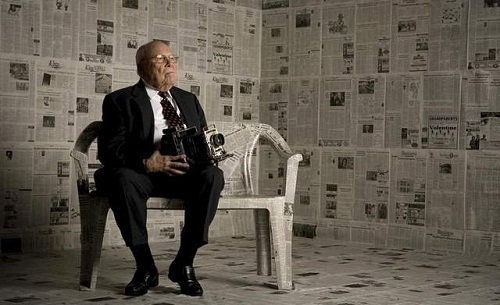
Longtime Alabama photographer Calvin Hannah has died. He was 81.

Hannah took pictures for The Tuscaloosa News for about 45 years, and he served a long stint as chief photographer before retiring in 1994.

He was diagnosed with Parkinson's disease in the mid-1980s but continued working for years.

Hannah briefly attended the University of Alabama but went to work at a photo studio because he needed money.

After joining the Tuscaloosa newspaper, he chronicled the civil rights movement in west Alabama, including the brief enrollment of Autherine Lucy as the first black student at the University of Alabama in 1956.

Hannah is survived by his wife of 56 years, Margaret, and three daughters.


11:34 AM | 0 comments | Read More